
Irrigation controllers & timers
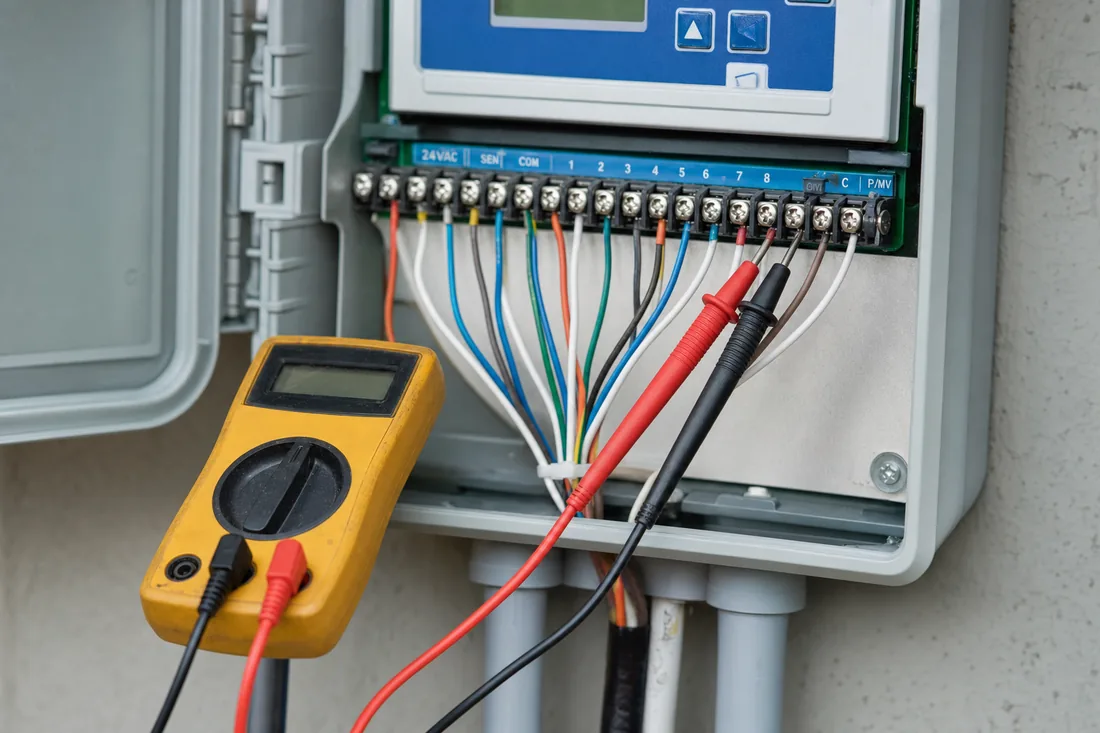
Zones with no output, dead displays, programs that will not hold, and rain-sensor or shutoff wiring that stops a system from running at all.

Asheville & Western North Carolina
Irrigation controllers, solenoid valves, buried wire faults, landscape lighting and transformers. We locate the actual fault with a meter and a tracer, so the repair addresses the cause rather than the symptom.
Services
Most low-voltage failures are a wiring fault, a bad solenoid or a voltage problem — not a system that needs replacing. Diagnosis comes first.
Zones with no output, dead displays, programs that will not hold, and rain-sensor or shutoff wiring that stops a system from running at all.
Zones that will not open, will not close, or weep continuously. Solenoid resistance is measured so a failed coil is confirmed before it is replaced.
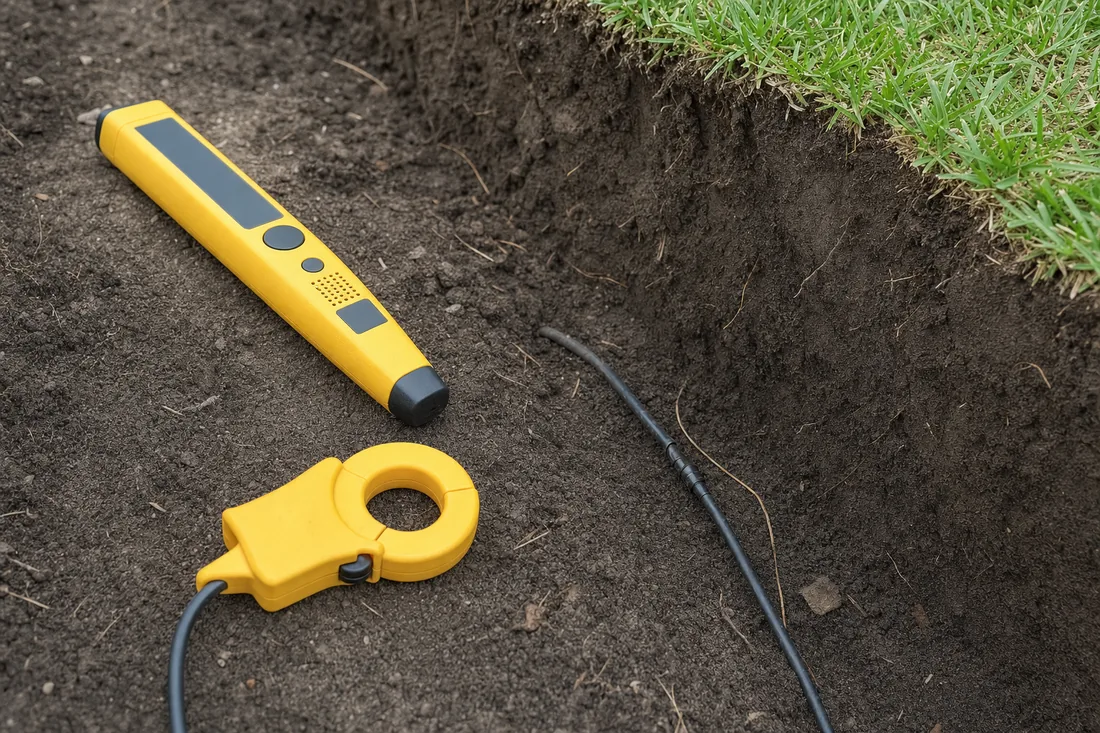
Shorts, opens and nicked common wire located with a tracer and inductive clamp, so the repair is a small dig at the fault instead of trenching the whole run.
Dead fixtures, runs that dim toward the end, corroded connections, and water intrusion at splices and sockets.
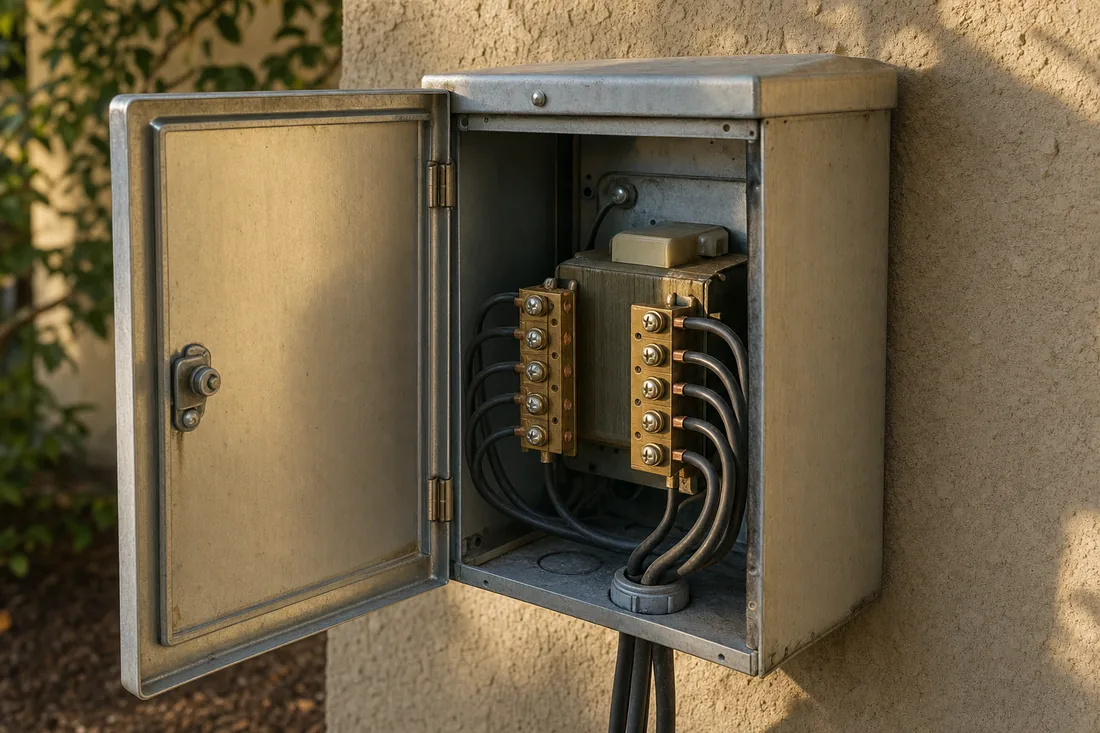
Failed transformers, nuisance breaker trips, wrong tap selection and unbalanced loads across a lighting system.
Measuring what an existing system actually delivers at each run, so you know what genuinely needs replacing before paying to replace it.
Scope
10.17 Diagnostics is a low-voltage practice. We do not work on 120V line-voltage circuits, service panels, new circuits or anything requiring a North Carolina electrical contractor license.
If a fault turns out to be on the line-voltage side of a transformer or controller, we will tell you plainly and help you find a licensed electrician who can take it from there. Knowing where that boundary sits is part of doing the job right.
How it works
Tell us what the system is doing — which zone, which fixtures, what changed and when. That conversation is free, and it often narrows the problem before the visit.
Meter, tracer and clamp. You get an actual reading and a plain explanation of what the fault is, where it is and why it happened.
You hear what needs to be done and what it will cost before anything is replaced. Nothing is replaced without a reading to support it.
Why diagnosis first
Replacing parts one at a time until the symptom disappears is the expensive way to fix a low-voltage system. A new controller, then a new solenoid, then a new transformer — and the original fault is often still in the ground.
Measuring first costs less and tells you something a parts swap never will: what actually failed, and whether it will fail again.
Service area
Based in Buncombe County and working across Western North Carolina.
Not sure whether you are in range? Call and ask — if the property is outside our range, we will say so and try to point you toward someone who can help.
Let us take a look